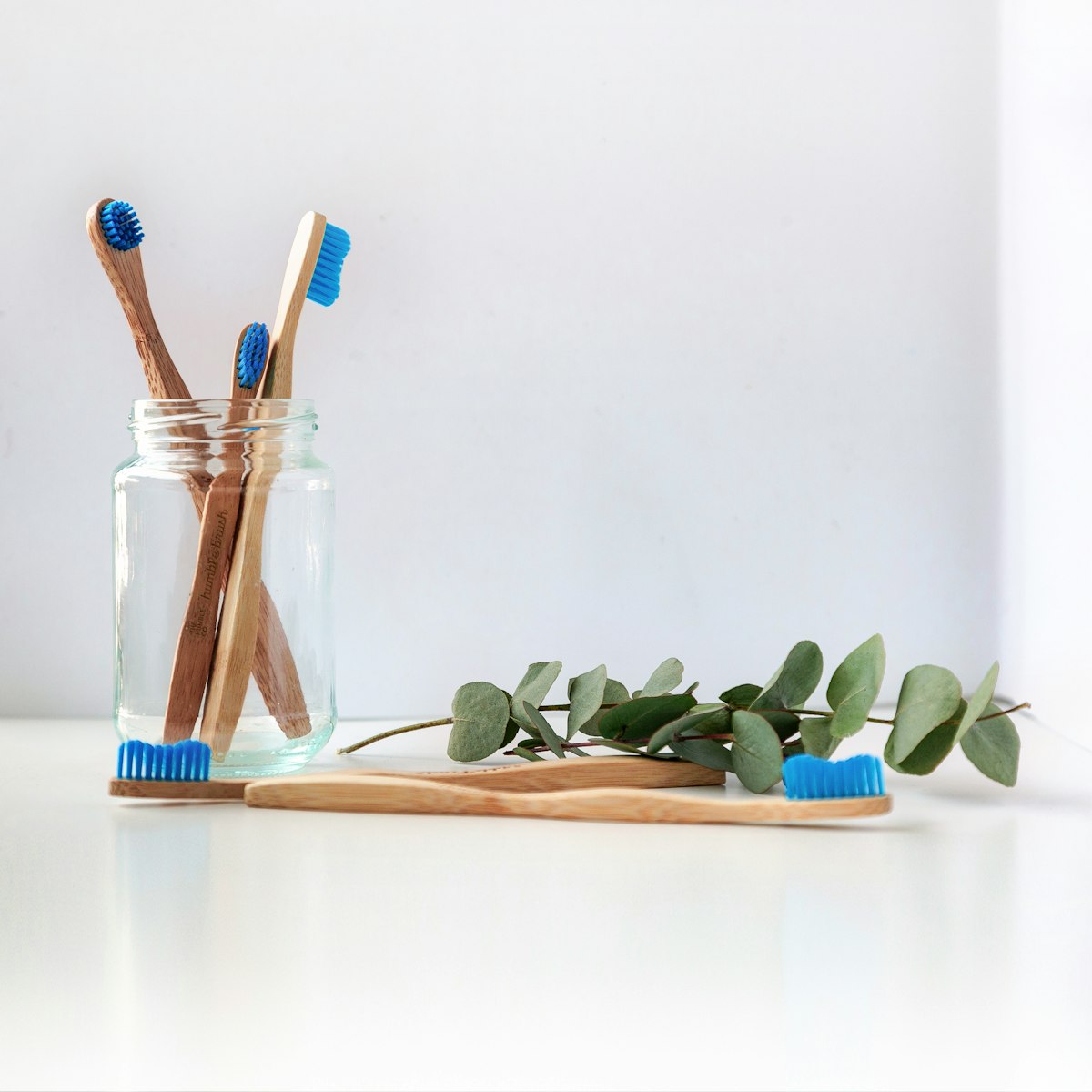
Brushing that protects your gums
Brush twice a day for two full minutes with a soft-bristled brush. The move that matters most for gum health: angle the bristles about 45 degrees into the gumline and use small, gentle circles. That margin where tooth meets gum is where plaque does its damage, and it’s the spot most people skim past.
Pressure is the most common mistake we see. Scrubbing harder does not clean better. It wears enamel and pushes gums into recession. If your brush bristles splay out within a month or two, you’re pressing too hard.
Electric toothbrushes
A good electric brush genuinely helps most people, mainly because it standardizes technique. Let the brush do the work: guide it slowly from tooth to tooth without scrubbing, keep it angled toward the gumline, and use the built-in timer. Many models include a pressure sensor, which is worth having if you’re a hard brusher.
Flossing, the part everyone skips
Brushing cleans three of the five surfaces of each tooth. Floss handles the other two. Once a day, curve the floss into a C-shape against the side of each tooth and slide it gently below the gumline. Bleeding at first is common if you haven’t been flossing; it usually settles within a week or two of consistency. If it doesn’t, that’s a sign to get your gums checked.
Can’t get on with string floss? Interdental brushes and water flossers are honest alternatives, and for patients with implants, bridges, or braces they’re often the better tool. Ask us which size and type fits your mouth; it varies more than people expect.
The third habit: showing up
Even perfect home care leaves tartar that only professional instruments can remove. Regular cleanings, and for periodontal patients, maintenance visits every three months, are what keep the daily habits working.